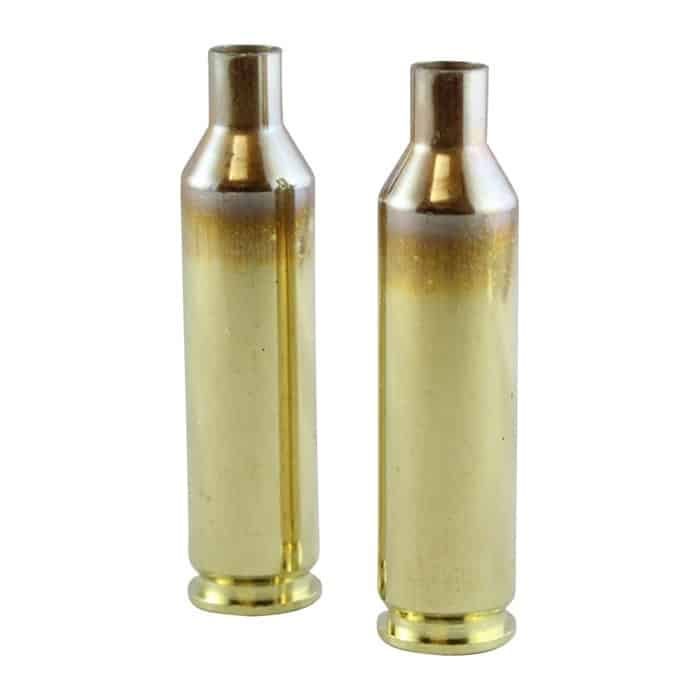
According to Derek Peterson, president of Peterson Cartridge, “We decided to build the tooling to make .22 Creedmoor brass in response to the uptick in long-distance predator and varmint hunting. Plus the round is just straight-up fun to shoot. It is a low-recoil, flat shooting, wind-bucking round; deadly accurate up to 800 yards.”
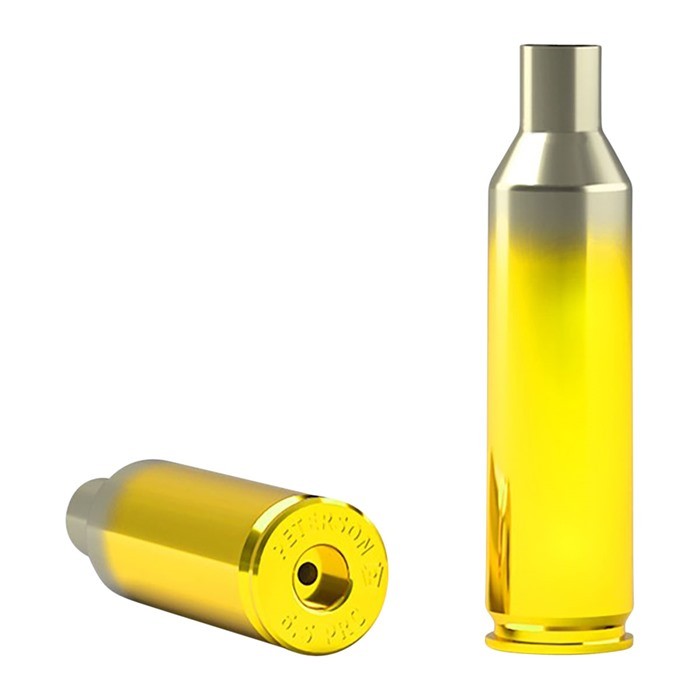
Peterson Cartridge also makes 6.5 and 6mm Creedmoor casings. “But when we designed the tooling for the .22 Creedmoor we set out to make casings with improved features,” Peterson stated. “And we were successful. We increased the head hardness to tolerate higher pressures. And we increased our internal volume slightly to work better with the slow burning powders (like RL 26, or H1000) which people favor for this round.”
Prior to this, shooters had to take 6mm or 6.5 Creedmoor casings and neck them down to .22. There are a few problems with necking down. When you take a larger caliber with the correct neck wall thickness and neck it down to a smaller caliber, that excess brass bunches up in the neck. It creates a tension band, what some people call a doughnut of brass in the neck, which has a negative effect on loading, bullet release and accuracy.
A trait of cartridge brass is that it work-hardens – which is to say the brass gets harder each time you “work it.” So the effect of necking down a casing which has been properly annealed, is that after you “work” it, it is no longer properly annealed.
Finally, necking a larger caliber into a smaller one results in neck walls that are too thick. The ideal neck wall thickness for a case the size of .22 Creedmoor is .0143 to .0148. Necking down results in neck walls thicker than that. But the Peterson .22 Creedmoors all fall within that ideal spec.
Peterson worked with Derrick Ratliff of Horizon Firearms on the particulars of the casing. Horizon has been chambering guns in .22 Creedmoor since 2014. Horizon has been a pioneer in helping move the .22 Crd. from an unknown wildcat to the popular caliber it is today.
$54.99 Original price was: $54.99.$48.83Current price is: $48.83.
According to Derek Peterson, president of Peterson Cartridge, “We decided to build the tooling to make .22 Creedmoor brass in response to the uptick in long-distance predator and varmint hunting. Plus the round is just straight-up fun to shoot. It is a low-recoil, flat shooting, wind-bucking round; deadly accurate up to 800 yards.”
Peterson Cartridge also makes 6.5 and 6mm Creedmoor casings. “But when we designed the tooling for the .22 Creedmoor we set out to make casings with improved features,” Peterson stated. “And we were successful. We increased the head hardness to tolerate higher pressures. And we increased our internal volume slightly to work better with the slow burning powders (like RL 26, or H1000) which people favor for this round.”
Prior to this, shooters had to take 6mm or 6.5 Creedmoor casings and neck them down to .22. There are a few problems with necking down. When you take a larger caliber with the correct neck wall thickness and neck it down to a smaller caliber, that excess brass bunches up in the neck. It creates a tension band, what some people call a doughnut of brass in the neck, which has a negative effect on loading, bullet release and accuracy.
A trait of cartridge brass is that it work-hardens – which is to say the brass gets harder each time you “work it.” So the effect of necking down a casing which has been properly annealed, is that after you “work” it, it is no longer properly annealed.
Finally, necking a larger caliber into a smaller one results in neck walls that are too thick. The ideal neck wall thickness for a case the size of .22 Creedmoor is .0143 to .0148. Necking down results in neck walls thicker than that. But the Peterson .22 Creedmoors all fall within that ideal spec.
Peterson worked with Derrick Ratliff of Horizon Firearms on the particulars of the casing. Horizon has been chambering guns in .22 Creedmoor since 2014. Horizon has been a pioneer in helping move the .22 Crd. from an unknown wildcat to the popular caliber it is today.
Out of stock
According to Derek Peterson, president of Peterson Cartridge, “We decided to build the tooling to make .22 Creedmoor brass in response to the uptick in long-distance predator and varmint hunting. Plus the round is just straight-up fun to shoot. It is a low-recoil, flat shooting, wind-bucking round; deadly accurate up to 800 yards.”
Peterson Cartridge also makes 6.5 and 6mm Creedmoor casings. “But when we designed the tooling for the .22 Creedmoor we set out to make casings with improved features,” Peterson stated. “And we were successful. We increased the head hardness to tolerate higher pressures. And we increased our internal volume slightly to work better with the slow burning powders (like RL 26, or H1000) which people favor for this round.”
Prior to this, shooters had to take 6mm or 6.5 Creedmoor casings and neck them down to .22. There are a few problems with necking down. When you take a larger caliber with the correct neck wall thickness and neck it down to a smaller caliber, that excess brass bunches up in the neck. It creates a tension band, what some people call a doughnut of brass in the neck, which has a negative effect on loading, bullet release and accuracy.
A trait of cartridge brass is that it work-hardens – which is to say the brass gets harder each time you “work it.” So the effect of necking down a casing which has been properly annealed, is that after you “work” it, it is no longer properly annealed.
Finally, necking a larger caliber into a smaller one results in neck walls that are too thick. The ideal neck wall thickness for a case the size of .22 Creedmoor is .0143 to .0148. Necking down results in neck walls thicker than that. But the Peterson .22 Creedmoors all fall within that ideal spec.
Peterson worked with Derrick Ratliff of Horizon Firearms on the particulars of the casing. Horizon has been chambering guns in .22 Creedmoor since 2014. Horizon has been a pioneer in helping move the .22 Crd. from an unknown wildcat to the popular caliber it is today.
| Weight | 1.53 lbs |
|---|---|
| Quantity | 50 |
| Rounds | 50 |
| Cartridge | ADO_22 Creedmoor |
We stock both premium factory-new components and high-quality once-fired brass. Please check the specific product listing title and description carefully; once-fired brass is fully inspected, but we always recommend resizing and inspecting prior to priming and powder charging.
Our standard reloading dies and case length trimmer accessories utilize industry-standard threads (typically 7/8"-14) compatible with major single-stage, turret, and progressive presses like RCBS, Hornady, Lee Precision, and Dillon. Caliber-specific trim gauges must match your exact brass caliber.
Yes. Non-hazardous reloading equipment (dies, case length trimmers, gauges, and unprimed brass) ships via standard ground carriers with no extra fees. Any orders containing smokeless powders or primers will incur standard federal HazMat handling fees and cannot be shipped via air transportation.
Precision reloading gear is valuable, so all orders are shipped with tracking enabled. As soon as your package is dispatched from our inventory warehouse, a tracking number will be emailed to you. You can monitor your shipment directly on our Track Order page using your unique Order ID.
We accept returns on unused, unaltered tools, case preparation equipment, and unopened component boxes within 30 days of item delivery. Due to safety and strict quality control on the reloading bench, we absolutely cannot accept returns on opened packs of primers, smokeless powder, or processed brass casings.